MovingSpring
MovingSpring 요소는 보요소로 구선된 선 또는 면 위를 구르는 이동 스프링(스프링과 댐퍼의 조합)을 모사한다.
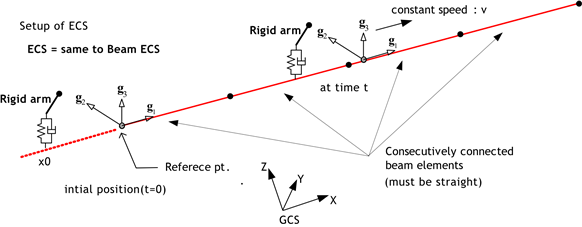
Fig. 4.9-1. Beam으로 구성된 선위의 MovingSpring 요소
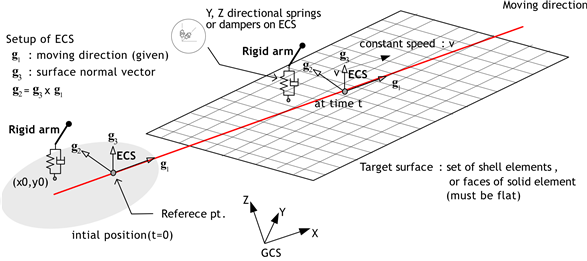
Fig. 4.9-2. 3차원 surface 상의 MovingSpring 요소
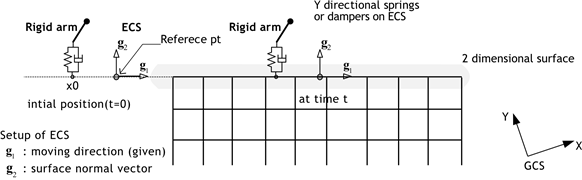
Fig. 4.9-3. 2차원 Surface 상의 MovingSpring 요소
▪ 주의
- 동해석을 수행할 경우 먼저 자중을 고려한 정해석을 수행해야 한다
- 이동스프링 요소를 구동하기 위해서는
*State, Type=MovingSpringSpeed를 이용해 속도를 지정해야 한다. - 감쇠를 고려할 경우 전체 강성 행렬은 비대칭행렬이 된다.
Example
*ELSET, Name=rail
 Beam

*SECTION, TYPE=MCK, Name=PM
 Mass, 5750

*SECTION, TYPE=MovingSpring, Name=MS
 rail
 Spring, Y, 1595E3
 Damper, Y, 1000E3

*Element, TYPE=PointMass, ELSET=PM
 1000, 1000, S=PM

*Element, TYPE=MovingSpring, ELSET=MS
 1001, 1000, S=MS

*Distribution, TYPE=MovingSpringInitialPosition
 1001, 0.0

*Load, TYPE=Gravity, Name=SelfWeight
 1000,0,-9.81, 0.

*STEP, TYPE=Static Name=S
*Activate, TYPE=Element
 Beam, PM, MS
*Activate, TYPE=Constraint
 BC
*Activate, TYPE=Load
 SelfWeight

*STEP, TYPE=Dynamic Name=Dyn, Prev=S
 , 0.02, 2.
*State, Type=MovingSpringSpeed
 MS, 27.78
*Element, Type=MovingSpring
*Element, Type=MovingSpring, ELSet=elset
 id, n1{, S=section, P=x,y}
 ...
First dataline and subsequent datalines
- P=x,y: Reference point에 대한 초기 위치. ECS상에 정의되며, 보요소를 대상으로 할 때는 y는 무시됨
Specifications
- No. of nodes: 1
- No. of integration pts.: 1
- Fields: SF=[...], SE=[...], DF=[...], DE=[...] at element center.
- Compatible section: MovingSpring
- Active DOFs: 정의에 따라 Y, Z 가 가능
SF, SE, DF, DE 등에 대한 설명은 *Element, TYPE=Spring 참조
*Section, Type=MovingSpring
MovigSpring의 단면을 정의
*Section, Type=MovingSpring, Name=name
  surface, refx, refy, refz, g1x, g1y, g1z, xRigid, yRigid, zRigid
  Spring, oneDof, coef|material
  ...
  Damper, oneDof, coef|material
  ...
  UnitSystem, force-length-time

*Section, Type=MovingSpring, Name=name
  line, xRigid, yRigid, zRigid
  Spring, oneDof, coef|material
  ...
  Damper, oneDof, coef|material
  ...
  UnitSystem, force-length-time
First dataline for Line
- line: target beam elset ... The beams should be connected
- xRigid,yRigid,zRigid: position vector from ref. node (rigid arm vector) (x1 is required, other optional)
First dataline for Surface
- surface: Target surface (required).
- refx, refy, refz: Reference point (optional, default is 0, 0, 0).
- g1x, g1y, g1z: Direction of travel (1, 0, 0).
- xRigid, yRigid, zRigid: Position vector from the reference node (rigid arm vector) (optional, default is 0, 0, 0).
Second and subsequent dataline starting with Spring
- oneDof: Degree of freedom to which the spring is applied; one of Y and Z
- coef: Spring coefficient
- material: Reference material model used instead of the spring coefficient. Must support uniaxial material behavior
Second and subsequent dataline starting with Damper
- oneDof: Degree of freedom to which the dmaper is applied; one of Y and Z
- coef: Damping coefficient
- material: Reference material model used instead of the damping coefficient. Must support uniaxial material behavior
Optional single UnitSystem dataline after second dataline
- force-length-time: The local unit system applied to this section. force must be one of N, kN, kgf, tonf, lbf, or kip; length must be one of m, cm, mm, km, in, ft, yd, or mi; and time must be one of s, min, hr, or day.
Spring, Damper, UnitSystem은 2번째 데이터라인부터 순서와 무관하게 정의할 수 있으며, Spring, Damper는 Y, Z 각각 최대 1회씩 사용가능하고, UnitSystem은 최대 1회 사용가능핟.
스프링계수 또는 감쇠계수는 일반적으로 수치값으로 정의한다. 그러나 비선형 거동을 표현하려는 경우에는 1축 재료 모델을 지원하는 재료를 참조하는 방식으로 정의할 수 있다. 예를 들어 Y방향 Spring에 1축 재료 모델을 지정하면, 해당 재료의 응력-변형률 관계는 Y방향의 일반화된 하중-변위 관계로 해석한다.
- localUnitSystem은 옵션이며 kN-mm-s와 같이 force-length-time 형식으로 지정한다. force는 N, kN, kgf, tonf, lbf, kip 중 하나, length는 m, cm, mm, km, in, ft, yd, mi 중 하나, time은 s, min, hr, day 중 하나를 사용한다.
- localUnitSystem을 지정하는 경우에는
*Environment, TYPE=UnitSystem에서 global UnitSystem이 먼저 정의되어 있어야 한다. - localUnitSystem을 지정하지 않으면 이 Section의 입력은
*Environment, TYPE=UnitSystem에서 정의한 global UnitSystem을 따른다. - localUnitSystem은 이 Section에서 사용하는 coef 또는 material의 단위계를 정의한다.
- localUnitSystem과 global UnitSystem이 같으면 입력값은 별도의 스케일 변환 없이 그대로 사용된다. 두 단위계가 다르면 내부적으로 적절한 단위 변환이 수행된다. 예를 들어 global UnitSystem이 kN-m-s이고 localUnitSystem이 kN-mm-s인 상태에서 Y방향 Spring에 재료 모델을 사용하는 경우, 변위는 재료 모델 평가 전에 m 기준에서 mm 기준으로 환산되며, 재료 모델에서 계산된 일반화된 하중은 다시 global UnitSystem 기준으로 환산되어 해석에 사용된다.
Example
*SECTION, TYPE=MovingSpring, Name=MSx
 rail
 Spring, Y, 1595E3
 Damper, Y, 1000E3
*SECTION, TYPE=MovingSpring, Name=MS
 rail
 Spring, Y, 1595E3
 Damper, Y, 1000E3
 UnitSystem, kN-mm-s